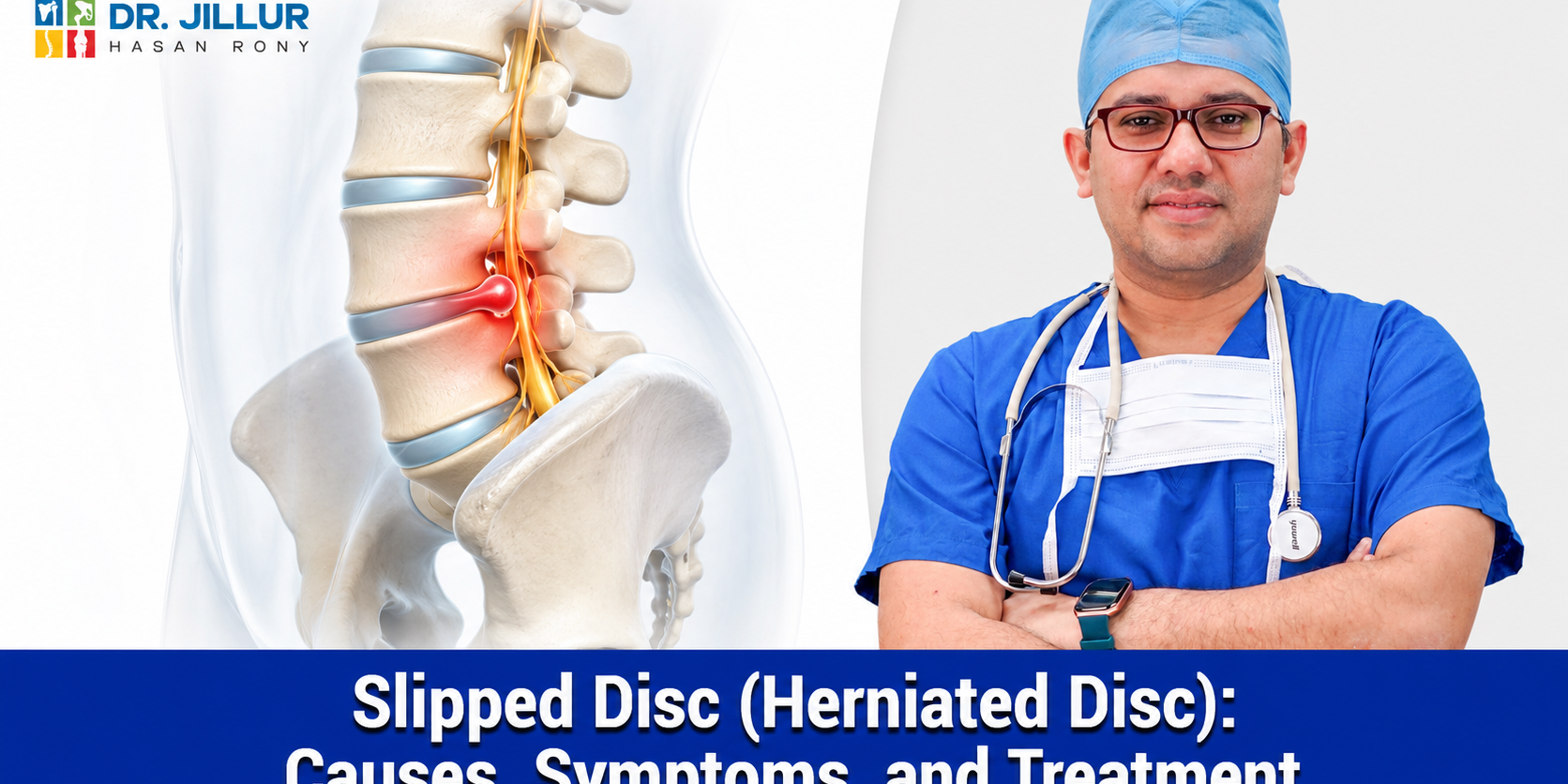
Back pain is one of the most common health complaints worldwide, and a slipped disc—also known as a herniated disc—is a frequent cause. While the term “slipped disc” is widely used, the spinal disc does not actually slip out of place. Instead, the soft inner portion of a spinal disc pushes through a tear in its outer layer, potentially irritating nearby nerves and causing pain.
A herniated disc can affect people of all ages, but it is most common among adults between the ages of 30 and 50. Understanding the causes, symptoms, and treatment options can help patients seek appropriate care and reduce the risk of long-term complications.
What Is a Slipped Disc?
The spine is made up of a series of bones called vertebrae. Between these vertebrae are rubbery cushions known as intervertebral discs. These discs act as shock absorbers, helping the spine remain flexible while protecting it from daily stress.
Each disc consists of:
- A tough outer layer called the annulus fibrosus
- A soft, gel-like center called the nucleus pulposus
A herniated disc occurs when the inner gel pushes through a weakened or torn outer layer. If the protruding material presses on nearby nerves, symptoms such as pain, numbness, or weakness can develop.
Common Causes of a Herniated Disc
Several factors can contribute to the development of a slipped disc.
Age-Related Degeneration
As people age, spinal discs naturally lose water content and become less flexible. This makes them more prone to tears and injury.
Improper Lifting Techniques
Lifting heavy objects using the back instead of the legs places excessive stress on the spine and increases the risk of disc injury.
Repetitive Movements
Repeated bending, twisting, or heavy physical labor can gradually damage spinal discs over time.
Sudden Trauma
Falls, sports injuries, or accidents can cause an acute disc herniation.
Excess Body Weight
Carrying extra body weight increases pressure on the lower spine, particularly the lumbar discs.
Sedentary Lifestyle
Weak core muscles and poor posture may contribute to increased stress on spinal structures.
Types of Herniated Discs
Cervical Herniated Disc
Occurs in the neck region and may cause symptoms in the shoulders, arms, and hands.
Thoracic Herniated Disc
Occurs in the upper and middle back. This type is relatively uncommon.
Lumbar Herniated Disc
Occurs in the lower back and is the most common form. It often causes symptoms that travel down the legs.
Symptoms of a Slipped Disc
Symptoms vary depending on the location and severity of the herniation.
Lower Back Herniated Disc Symptoms
Common symptoms include:
- Lower back pain
- Pain radiating down one leg (sciatica)
- Numbness or tingling in the leg or foot
- Muscle weakness
- Difficulty standing or walking for long periods
Neck Herniated Disc Symptoms
Patients may experience:
- Neck pain
- Shoulder pain
- Arm pain
- Numbness or tingling in the fingers
- Weakness in the arm or hand
Severe Symptoms
In rare cases, a large disc herniation may compress important nerves and cause:
- Loss of bladder or bowel control
- Severe leg weakness
- Numbness in the groin or saddle area
These symptoms require immediate medical attention.
How Is a Herniated Disc Diagnosed?
A healthcare provider will typically begin with a medical history and physical examination.
During the examination, the doctor may assess:
- Muscle strength
- Reflexes
- Sensation
- Range of motion
- Walking ability
Imaging Tests
To confirm the diagnosis, imaging studies may be recommended.
MRI (Magnetic Resonance Imaging)
MRI is considered the gold standard for diagnosing herniated discs because it provides detailed images of soft tissues and nerves.
CT Scan
A CT scan may be used when MRI is not available or suitable.
X-rays
X-rays cannot directly show a herniated disc but may help identify other causes of back pain.
Treatment Options
Most people with a herniated disc improve without surgery.
Conservative Treatment
Rest and Activity Modification
Short periods of rest can help during severe flare-ups, but prolonged bed rest is generally discouraged.
Physical Therapy
Physical therapy is often one of the most effective treatments.
Therapy may include:
- Stretching exercises
- Core strengthening
- Posture correction
- Flexibility training
- Movement education
Pain Medications
Doctors may recommend:
- Acetaminophen
- Nonsteroidal anti-inflammatory drugs (NSAIDs)
- Muscle relaxants in selected cases
Hot and Cold Therapy
Ice packs may reduce inflammation, while heat therapy can help relax muscles and improve blood flow.
Epidural Steroid Injections
In some patients, corticosteroid injections around the affected nerve can reduce inflammation and provide temporary pain relief.
When Is Surgery Needed?
Most herniated discs improve with non-surgical treatment. However, surgery may be considered when:
- Severe pain persists despite treatment
- Significant weakness develops
- Daily activities become severely limited
- Nerve damage is progressing
- Emergency symptoms occur
Common Surgical Procedures
Microdiscectomy
A minimally invasive procedure where the portion of the disc pressing on the nerve is removed.
Discectomy
Removal of part or all of the damaged disc.
Spinal Fusion
In certain cases, fusion may be required to stabilize the spine.
Recovery and Rehabilitation
Recovery time varies depending on the severity of the condition and the treatment approach.
Recovery Without Surgery
Many patients experience significant improvement within:
- 2 to 6 weeks for mild symptoms
- 6 to 12 weeks for moderate symptoms
Physical therapy often plays a major role in long-term recovery.
Recovery After Surgery
Patients who undergo surgery may return to light activities within a few weeks, although full recovery can take several months.
Rehabilitation focuses on:
- Restoring strength
- Improving flexibility
- Preventing recurrence
- Promoting healthy movement patterns
Can a Herniated Disc Heal Naturally?
In many cases, the body can gradually absorb some of the herniated material, reducing nerve irritation and symptoms.
This process may take weeks or months, which is why many patients improve with conservative care alone.
Tips to Prevent Future Disc Problems
While not all herniated discs can be prevented, healthy habits can reduce risk.
Maintain Good Posture
Proper sitting and standing posture help reduce stress on the spine.
Strengthen Core Muscles
Strong abdominal and back muscles provide support for the spine.
Lift Correctly
Always bend the knees and keep objects close to the body when lifting.
Stay Active
Regular exercise promotes spinal health and flexibility.
Maintain a Healthy Weight
Reducing excess body weight decreases strain on spinal discs.
Avoid Smoking
Smoking may accelerate disc degeneration and delay healing.
Outlook and Prognosis
Most patients with a slipped disc recover successfully with appropriate treatment. Early diagnosis, physical therapy, healthy lifestyle habits, and adherence to medical advice can significantly improve outcomes.
While some individuals may experience occasional flare-ups, many return to normal activities and enjoy a high quality of life after recovery.
Final Thoughts
A slipped disc, or herniated disc, can cause significant pain and discomfort, but effective treatment options are available. Understanding the causes, recognizing symptoms early, and seeking proper medical care are essential for successful recovery.
Whether treated with physical therapy, medications, injections, or surgery, most patients can achieve substantial pain relief and return to their daily activities with proper rehabilitation and ongoing spinal care.