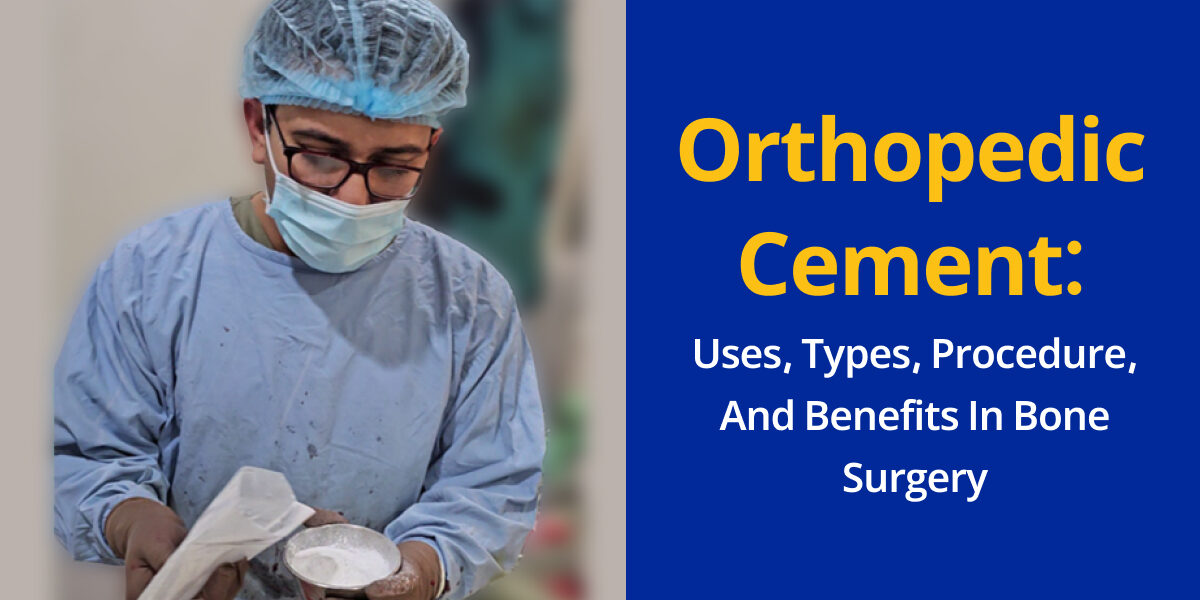
Orthopedic cement is a key material in modern bone and joint surgeries. It plays an important role in fixing implants, reducing pain, and restoring mobility. Surgeons use it to fill gaps between bone and artificial implants so the joint becomes stable.
This stability helps patients walk, move, and recover faster. In simple terms, orthopedic cement is not glue but a special material that anchors implants securely inside the bone. Over the years, it has become an essential tool in orthopedic surgery worldwide.
What is Orthopedic Cement?
Definition of Orthopedic Cement
Orthopedic cement is a medical-grade material used to fix implants in bones. It is mostly made of polymethylmethacrylate (PMMA), a type of acrylic material. Unlike common cement used in construction, it does not bind two surfaces together.
Instead, it creates a tight space-filling bond between the implant and the bone. This provides stability and long-term support to artificial joints.
Role in Bone and Joint Surgeries
In joint replacement surgeries such as hip replacement and knee replacement, orthopedic cement fills the gap between the implant and the bone. It distributes body weight and pressure evenly across the implant.
This reduces pain and improves function. Orthopedic cement is also used in fracture treatment, spinal surgeries, and bone tumor management. It helps fix metal plates, rods, or prostheses in place. The result is faster healing, better joint mobility, and improved quality of life for patients.
Types of Orthopedic Cement
Polymethylmethacrylate (PMMA) Cement
PMMA cement is the most widely used orthopedic cement. It has been in use for decades because of its strength and durability. PMMA comes as a powder and liquid. When mixed, it becomes a paste that hardens inside the body.
Surgeons prefer it for hip and knee replacements, spinal surgeries, and trauma cases. Its smooth application and reliable performance make it the gold standard in orthopedic procedures.
Antibiotic-Loaded Cement
Antibiotic-loaded cement is PMMA mixed with antibiotics. It helps prevent infections after surgery. Infection is one of the most serious risks in orthopedic surgery.
Adding antibiotics directly to the cement, surgeons deliver medicine to the exact surgical site. This reduces the risk of bacteria growth and implant failure. Antibiotic-loaded cement is widely used in revision surgeries, especially when infection risk is high.
Other Innovative Cement Types
Recent research has led to new types of orthopedic cement. These include bone-regenerating cements that support natural bone healing. Some cements are bioactive and can bond directly with bone tissue.
Others are designed to release drugs slowly over time. These innovations improve patient recovery and reduce complications. The future of orthopedic cement is moving toward safer, stronger, and more biologically compatible materials.
How Orthopedic Cement Works
Bone Fixation Process
Orthopedic cement works by filling gaps between bones and implants. When mixed, it becomes a soft paste that can be molded around the implant. Once applied, it hardens quickly and anchors the implant firmly. This fixation helps the bone and implant move together as one unit.
It prevents implant loosening and reduces the risk of movement or misalignment. Surgeons carefully control the cement application to ensure proper placement. The result is a secure bond that supports normal motion after surgery.
Strength and Stability for Implants
One of the main advantages of orthopedic cement is the strength it provides. The hardened cement can bear body weight immediately after surgery. This allows patients to start limited movement sooner, improving recovery.
Cement also stabilizes implants in areas with weak or fragile bone. It distributes pressure evenly across the joint or bone, reducing stress points. Overall, orthopedic cement gives both mechanical stability and long-term support for implants.
Applications of Orthopedic Cement
Joint Replacement Surgeries
Orthopedic cement is widely used in hip, knee, and shoulder replacement surgeries. It fixes metal or ceramic implants to the natural bone. This allows the joint to move smoothly without pain. Cemented implants are particularly useful for elderly patients with weaker bones. By providing a solid anchor, it improves mobility and reduces post-surgery complications.
Fracture Repair and Bone Filling
In cases of complex fractures, orthopedic cement can fill gaps in broken bones. It supports bone fragments and prevents collapse. Cement also helps in bone voids, created by injury or tumor removal. By filling these spaces, the cement restores structural integrity and supports healing.
Spinal Surgeries
Orthopedic cement is used in spinal procedures such as vertebroplasty and kyphoplasty. It stabilizes fractured or weakened vertebrae. The cement reduces pain, strengthens the spine, and prevents further collapse. This application is especially helpful for patients with osteoporosis or spinal injuries.
| Cement Type | Pros | Cons |
| Polymethylmethacrylate (PMMA) | Strong and durable, widely used, easy to handle, reliable fixation for hip & knee implants | Does not bond with bone, heat generation during setting, risk of cement cracks over time |
| Antibiotic-Loaded Cement | Prevents post-surgery infections, delivers antibiotics directly to surgical site, ideal for high-risk or revision surgeries | Limited antibiotic types, may slightly reduce mechanical strength, costlier than plain PMMA |
| Bioactive Cement | Bonds directly with bone, supports natural bone healing, promotes long-term stability | Still under research, expensive, limited availability |
| Calcium Phosphate Cement | Biodegradable, gradually replaced by natural bone, osteoconductive | Lower mechanical strength than PMMA, not suitable for high-load joints |
| Composite/Innovative Cements | Can release drugs slowly, tailored properties for specific surgeries, improved biocompatibility | New technology, costlier, limited long-term data |
Procedure of Applying Orthopedic Cement
Preparation Before Application
Before using orthopedic cement, surgeons carefully prepare the bone and implant site. The bone surface is cleaned and dried to remove debris or fluids.
Any gaps or irregularities are measured. Proper preparation ensures the cement bonds well with both the bone and the implant. Surgeons may also pre-mix the cement components according to the type used. Safety checks are done to prevent contamination or air bubbles.
Mixing and Setting Process
Orthopedic cement typically comes as a powder and liquid. When mixed, it forms a smooth, moldable paste. The paste must be applied quickly before it starts to harden. Timing is critical because the cement hardens within minutes.
Some cements generate heat during setting, so surgeons monitor temperature carefully. Once applied, the cement cures and forms a strong anchor between the bone and implant.
Surgical Techniques
Surgeons use specialized tools to apply cement evenly. They ensure that the implant sits correctly and that the cement fills all gaps. Techniques vary depending on the procedure: hip, knee, or spinal surgeries may have different application methods.
After setting, the implant is checked for stability and alignment. Proper technique minimizes complications and improves long-term outcomes.
Advantages of Orthopedic Cement
Immediate Fixation and Stability
Orthopedic cement provides instant stability to implants. Patients can begin limited movement soon after surgery. This immediate fixation reduces the risk of implant loosening or misalignment. It also supports weak or fragile bones, making the surgery more effective.
Reduced Healing Time
Because the cement stabilizes bones and implants, recovery is faster. Patients experience less pain and can start rehabilitation earlier. Early mobility improves joint function and overall outcomes.
Infection Control with Antibiotic Cement
Antibiotic-loaded cement prevents bacterial growth at the surgical site. This is especially important in high-risk or revision surgeries. By delivering antibiotics directly to the bone, infection risk is minimized. Surgeons prefer it when infection could compromise implant success.
Risks and Limitations of Orthopedic Cement
Potential Complications
- Risk of allergic reaction to cement components.
- Bone or tissue damage if cement is not applied correctly.
- Possibility of implant loosening over time.
- Rare systemic effects from cement monomers.
Cement Leakage Issues
- Cement may leak outside the intended area during surgery.
- Leakage can cause nerve or tissue irritation.
- Surgeons must carefully control cement volume and placement.
Long-Term Concerns
- Cement may crack or degrade after many years.
- Risk of revision surgery if implant fails.
- Limited ability to bond naturally with bone in some cement types.
Innovations in Orthopedic Cement
Bioactive Bone Cements
- Promote natural bone growth around the implant.
- Bond directly with bone tissue for long-term stability.
- Reduce the need for additional bone grafts.
Nanotechnology in Cement
- Nano-additives improve strength and durability.
- Can provide controlled drug release over time.
- Enhances biocompatibility for better patient outcomes.
Future of Orthopedic Cement
- Development of smarter, drug-releasing cements.
- More biodegradable and bone-regenerating options.
Focus on reducing complications and improving implant longevity.
| Method | Description | Pros | Cons |
| Orthopedic Cement | A polymer-based material used to anchor implants or fill bone voids. | Provides immediate stability; long-lasting; supports joint replacements. | Can have complications in rare cases; difficult to remove completely. |
| Bone Grafts | Uses natural bone from the patient or a donor to repair or replace damaged bone. | Promotes natural bone growth; biocompatible. | Limited supply; requires longer healing time; possible donor site pain. |
| Biodegradable Fillers | Resorbable materials that gradually get replaced by natural bone. | Reduces long-term foreign material in the body; supports bone regeneration. | May not provide immediate structural strength; slower support. |
| Other Fixation Methods | Mechanical methods like screws, plates, rods, or external fixators. | Immediate mechanical stability; adjustable if needed. | May require larger surgery; risk of infection or implant failure. |
FAQs on Orthopedic Cement
How long does orthopedic cement last?
Orthopedic cement is designed to provide long-term stability in bone surgeries. Its lifespan can vary depending on the type of cement, the surgical site, and the patient’s overall health. In many cases, it can last for several years or even decades, especially in joint replacement and fracture repair procedures.
Is orthopedic cement safe for all patients?
Orthopedic cement is generally safe for most patients. However, individual factors such as allergies, bone quality, or pre-existing medical conditions may affect its suitability. Surgeons carefully evaluate these factors before recommending its use to ensure patient safety.
Can orthopedic cement be removed?
Yes, orthopedic cement can be removed if necessary, though this typically requires a specialized surgical procedure. Removal is usually considered during revision surgeries or if complications arise, and it should only be performed by an experienced orthopedic surgeon.
Conclusion
Orthopedic cement has emerged as a crucial tool in modern bone surgeries, offering stability and support where natural bone may be insufficient or compromised.
It provides a reliable alternative to other methods such as bone grafts, biodegradable fillers, or mechanical fixation, especially in joint replacement and fracture repair procedures. While alternatives have their own benefits, orthopedic cement stands out for its immediate structural reinforcement and long-term durability.