Shoulder pain can make even the simplest daily activities difficult. Reaching overhead, lifting objects, getting dressed, or sleeping comfortably may become challenging when the shoulder is injured. One of the most common causes of persistent shoulder pain is a rotator cuff tear.
Rotator cuff injuries affect millions of people worldwide, particularly athletes, manual laborers, and older adults. While some tears can be managed with conservative treatment, others may require surgery and rehabilitation.
In this guide, we’ll explain what a rotator cuff tear is, its symptoms, causes, treatment options, and what to expect during recovery.
What Is a Rotator Cuff Tear?
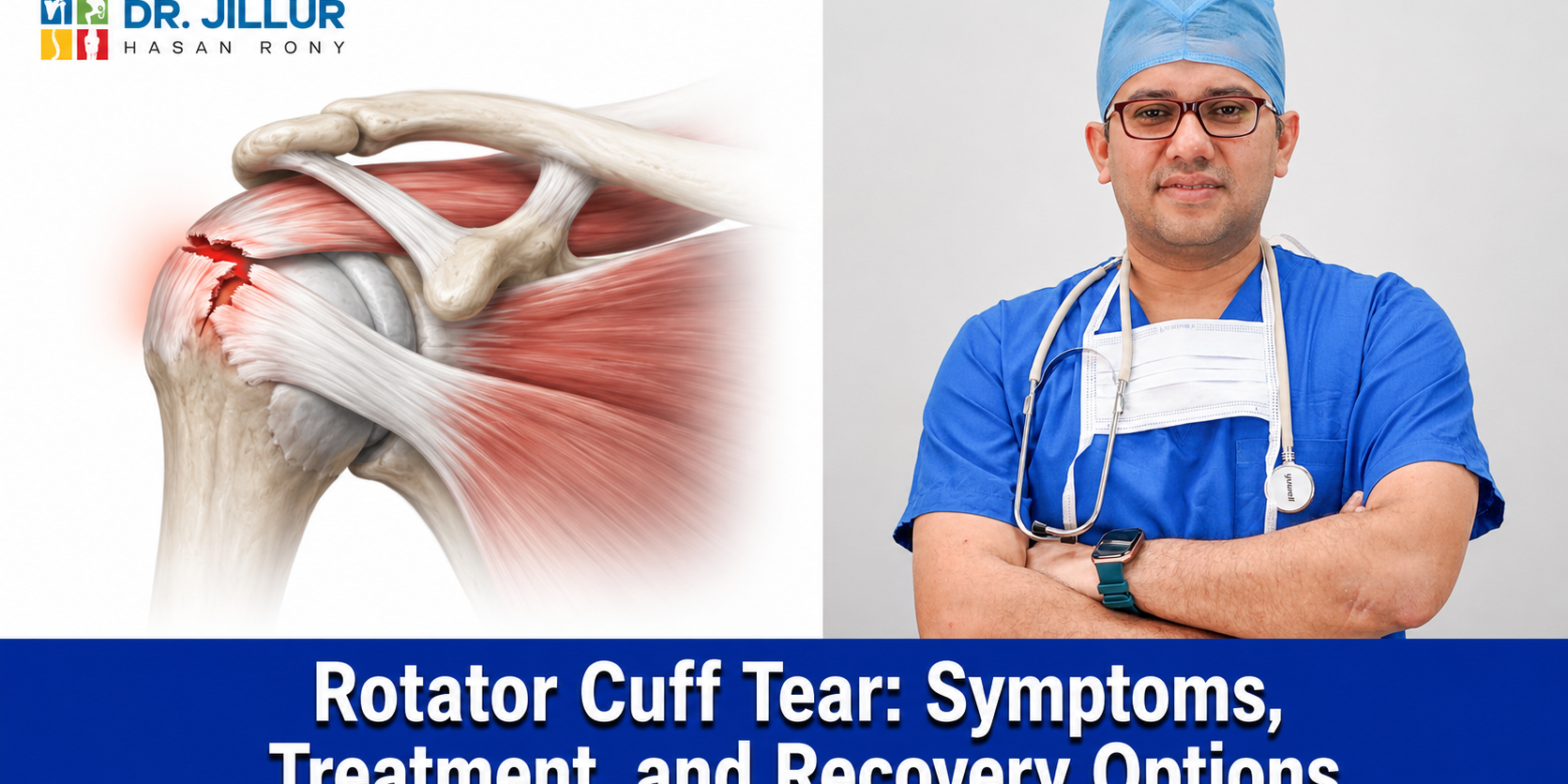
The rotator cuff is a group of four muscles and their tendons that surround the shoulder joint. These muscles work together to stabilize the shoulder and allow smooth arm movements.
The four rotator cuff muscles are:
- Supraspinatus
- Infraspinatus
- Teres Minor
- Subscapularis
A rotator cuff tear occurs when one or more of these tendons become partially or completely torn.
The injury may develop suddenly after trauma or gradually over time due to wear and tear.
Types of Rotator Cuff Tears
Partial Tear
A partial tear damages part of the tendon but does not completely separate it from the bone.
Full-Thickness Tear
A full-thickness tear extends completely through the tendon.
Complete Tear
In a complete tear, the tendon becomes fully detached from its attachment point on the bone.
The severity of symptoms often depends on the size and location of the tear.
Common Causes of Rotator Cuff Tears
Age-Related Degeneration
As people age, tendons naturally weaken and become more susceptible to injury.
This is one of the most common causes of rotator cuff tears in adults over 40.
Repetitive Overhead Activities
Jobs and sports that involve repeated overhead movements can increase stress on the shoulder.
Examples include:
- Painting
- Construction work
- Tennis
- Swimming
- Baseball
Traumatic Injury
A sudden fall, lifting a heavy object, or direct impact to the shoulder can cause an acute rotator cuff tear.
Poor Shoulder Mechanics
Weak shoulder muscles, poor posture, and improper movement patterns may contribute to tendon damage over time.
Symptoms of a Rotator Cuff Tear
Symptoms vary depending on the size and severity of the injury.
Common signs include:
Shoulder Pain
Pain is usually felt on the outer part of the shoulder and upper arm.
It may worsen during:
- Lifting
- Reaching overhead
- Sleeping on the affected side
Weakness
Patients often notice difficulty:
- Lifting objects
- Raising the arm
- Performing overhead activities
Limited Range of Motion
Shoulder movement may become restricted due to pain and weakness.
Clicking or Popping Sensation
Some people experience grinding, clicking, or popping sounds during shoulder movement.
Night Pain
Nighttime pain is one of the most common complaints among patients with rotator cuff injuries.
How Rotator Cuff Tears Are Diagnosed
An orthopedic specialist typically performs a combination of:
Physical Examination
The doctor evaluates:
- Shoulder strength
- Range of motion
- Pain patterns
- Functional limitations
Imaging Tests
X-rays
Although X-rays cannot directly show tendon tears, they can identify bone abnormalities.
Ultrasound
Ultrasound may help visualize tendon damage.
MRI
MRI is considered one of the most effective tools for diagnosing rotator cuff tears and determining their severity.
Non-Surgical Treatment Options
Many partial tears and some complete tears can be treated without surgery.
Rest and Activity Modification
Reducing activities that aggravate symptoms allows the tendon to heal and inflammation to decrease.
Physical Therapy
Physical therapy is often the cornerstone of treatment.
Exercises focus on:
- Improving shoulder flexibility
- Strengthening surrounding muscles
- Restoring movement patterns
- Reducing pain
Anti-Inflammatory Medications
Doctors may recommend medications to reduce pain and inflammation.
Corticosteroid Injections
In some cases, injections may provide temporary pain relief and improve function.
When Is Surgery Necessary?
Surgery may be recommended when:
- Symptoms persist despite conservative treatment
- The tear is large
- Significant weakness develops
- Daily activities become difficult
- The patient is an athlete or physically active individual
Early intervention may prevent the tear from enlarging over time.
Rotator Cuff Surgery
The most common procedure is arthroscopic rotator cuff repair.
During surgery, the surgeon:
- Removes damaged tissue.
- Reattaches the tendon to the bone.
- Uses specialized anchors and sutures to secure the repair.
Arthroscopic techniques generally involve smaller incisions and shorter recovery times compared to traditional open surgery.
Recovery After Rotator Cuff Surgery
Recovery is a gradual process and requires patience.
Phase 1: Immobilization
For several weeks after surgery, patients typically wear a sling to protect the repair.
The goal is to allow the tendon to heal properly.
Phase 2: Passive Motion
Under the guidance of a therapist, gentle movements are introduced without active shoulder muscle use.
Phase 3: Active Motion
As healing progresses, patients begin moving the shoulder independently.
Phase 4: Strengthening
Strengthening exercises help restore shoulder stability and function.
Phase 5: Return to Activities
Athletes and physically demanding workers gradually return to sports and occupational activities.
How Long Does Recovery Take?
Recovery varies depending on:
- Tear size
- Surgical technique
- Patient age
- Overall health
- Rehabilitation compliance
Typical timelines include:
- Sling use: 4–6 weeks
- Basic daily activities: 6–12 weeks
- Strength recovery: 3–6 months
- Full recovery: 6–12 months
Following rehabilitation instructions is critical for optimal outcomes.
Can a Rotator Cuff Tear Heal on Its Own?
Small partial tears may improve with conservative treatment, but complete tears generally do not heal naturally because the tendon has detached from the bone.
However, many patients achieve excellent function and pain relief through non-surgical management.
The best treatment depends on the individual’s symptoms, goals, and overall health.
Tips for Preventing Rotator Cuff Injuries
To reduce the risk of shoulder injuries:
- Maintain good posture
- Strengthen shoulder and upper back muscles
- Warm up before sports
- Avoid repetitive overhead strain
- Use proper lifting techniques
- Address shoulder pain early
Early treatment can help prevent minor tendon problems from becoming major tears.
Final Thoughts
A rotator cuff tear can significantly affect daily life, causing pain, weakness, and reduced shoulder function. Fortunately, modern treatment options ranging from physical therapy to advanced arthroscopic surgery offer excellent outcomes for many patients.
If you experience persistent shoulder pain, weakness, or difficulty performing everyday tasks, consult an orthopedic specialist for an evaluation. Early diagnosis and appropriate treatment can improve recovery and help restore shoulder strength, mobility, and quality of life.