
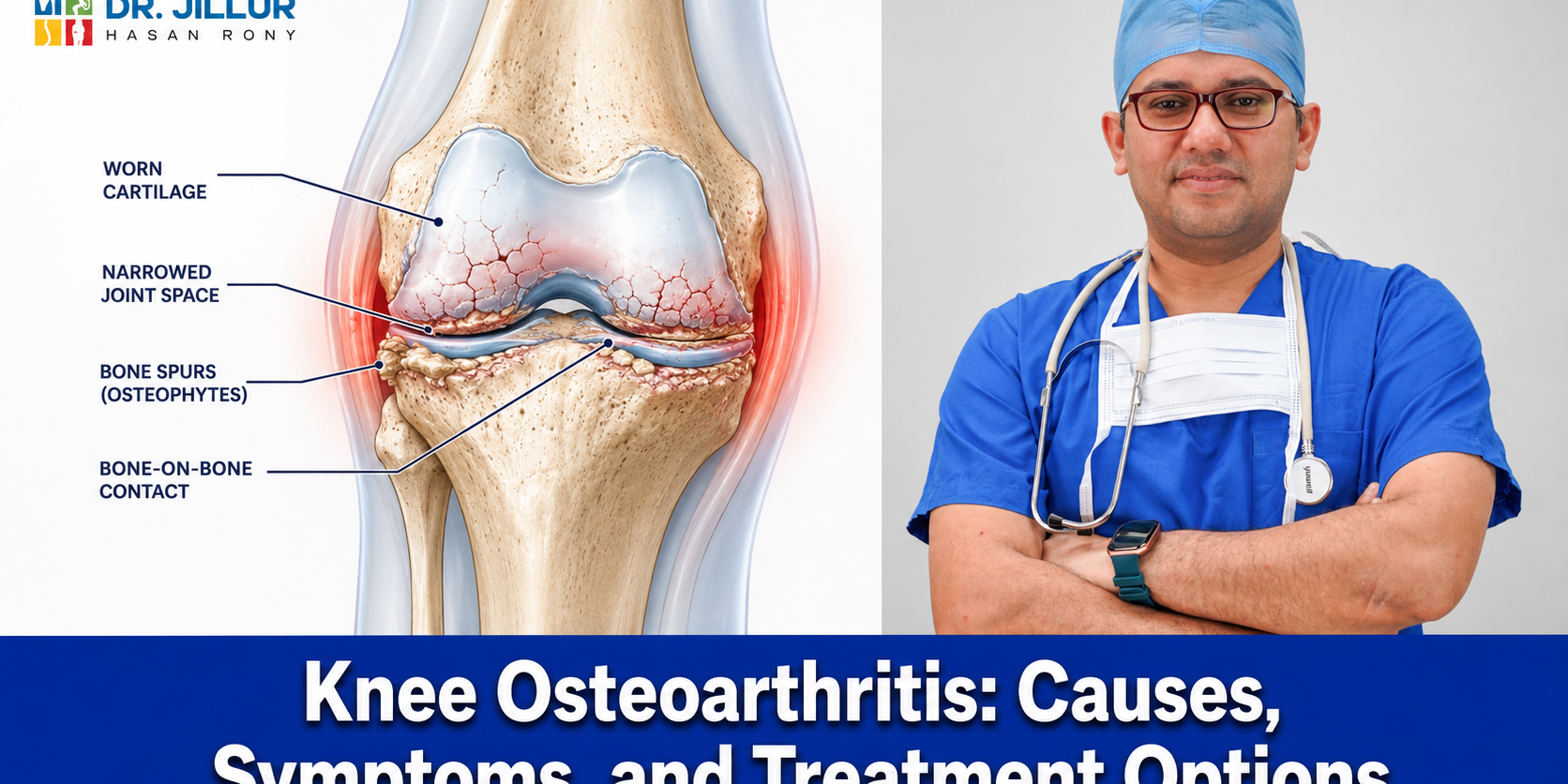
Knee osteoarthritis is one of the most common joint disorders worldwide and a leading cause of pain and disability among adults. The condition develops gradually as the protective cartilage in the knee joint wears down over time, leading to pain, stiffness, swelling, and reduced mobility.
Although osteoarthritis cannot be completely reversed, early diagnosis and proper treatment can significantly reduce symptoms, improve function, and help individuals maintain an active lifestyle. Understanding the causes, symptoms, and available treatment options is essential for managing the condition effectively.
What Is Knee Osteoarthritis?
Knee osteoarthritis (OA) is a degenerative joint disease that affects the cartilage covering the ends of the bones within the knee joint.
Healthy cartilage allows bones to glide smoothly against one another during movement. When this cartilage gradually breaks down, the bones may begin rubbing against each other, causing:
- Pain
- Inflammation
- Joint stiffness
- Reduced flexibility
- Bone spur formation
Over time, knee osteoarthritis can affect daily activities such as walking, climbing stairs, standing, and exercising.
How Common Is Knee Osteoarthritis?
Knee osteoarthritis is one of the most prevalent forms of arthritis.
The condition is particularly common among:
- Adults over age 50
- Women after menopause
- Individuals with obesity
- People with previous knee injuries
As life expectancy increases, the number of people affected by knee osteoarthritis continues to rise worldwide.
Causes of Knee Osteoarthritis
Several factors contribute to the development of knee osteoarthritis.
Age-Related Wear and Tear
The most common cause is the natural aging process.
As people age:
- Cartilage becomes thinner
- Joint lubrication decreases
- The knee becomes less resilient to stress
Obesity
Excess body weight places additional pressure on the knee joints.
Research suggests that every extra kilogram of body weight significantly increases stress on the knees during walking and other activities.
Previous Knee Injuries
A history of:
- Meniscus tears
- Ligament injuries
- Fractures around the knee
can increase the risk of developing osteoarthritis later in life.
Repetitive Joint Stress
Certain occupations and sports place repeated stress on the knees.
Examples include:
- Construction work
- Farming
- Professional sports
- Frequent squatting or kneeling
Genetics
Family history may play a role in determining susceptibility to osteoarthritis.
Joint Misalignment
Abnormal knee alignment can lead to uneven wear of the cartilage over time.
Symptoms of Knee Osteoarthritis
Symptoms typically develop gradually and may worsen over several years.
Knee Pain
Pain is the most common symptom.
It often occurs:
- During activity
- After prolonged standing
- When climbing stairs
- After exercise
As the condition progresses, pain may occur even during rest.
Joint Stiffness
Many people experience stiffness, especially:
- In the morning
- After sitting for long periods
- Following inactivity
Swelling
Inflammation inside the joint can cause visible swelling.
Reduced Range of Motion
The knee may become difficult to bend or straighten completely.
Grinding or Cracking Sounds
Patients often describe:
- Clicking
- Popping
- Grinding sensations
during knee movement.
Joint Instability
The knee may feel weak or unstable when walking.
Stages of Knee Osteoarthritis
Doctors often classify knee osteoarthritis into stages.
Stage 1: Minor Changes
- Minimal cartilage damage
- Mild symptoms or no symptoms
Stage 2: Mild Osteoarthritis
- Early cartilage wear
- Occasional pain and stiffness
Stage 3: Moderate Osteoarthritis
- Significant cartilage loss
- More frequent pain
- Reduced mobility
Stage 4: Severe Osteoarthritis
- Extensive cartilage damage
- Bone-on-bone contact
- Severe pain and disability
How Is Knee Osteoarthritis Diagnosed?
Medical History
Your healthcare provider will ask about:
- Symptoms
- Previous injuries
- Activity level
- Family history
Physical Examination
The doctor may assess:
- Swelling
- Joint tenderness
- Range of motion
- Walking pattern
- Knee stability
Imaging Tests
X-Rays
X-rays are commonly used to evaluate:
- Joint space narrowing
- Bone spurs
- Alignment changes
MRI
MRI may be recommended when more detailed information is needed regarding:
- Cartilage
- Meniscus
- Ligaments
- Soft tissues
Treatment Options for Knee Osteoarthritis
Treatment depends on symptom severity and overall health.
Non-Surgical Treatment
Most patients begin with conservative treatment.
Weight Management
Weight loss is one of the most effective ways to reduce knee pain.
Even modest weight reduction can significantly decrease stress on the joint.
Exercise and Physical Therapy
Regular exercise helps:
- Strengthen supporting muscles
- Improve flexibility
- Maintain joint mobility
- Reduce pain
Common activities include:
- Walking
- Swimming
- Cycling
- Strength training
Physical Therapy
A physical therapist may design a personalized rehabilitation program focused on:
- Muscle strengthening
- Balance improvement
- Flexibility exercises
- Gait correction
Pain Relief Medications
Doctors may recommend:
- Acetaminophen
- Nonsteroidal anti-inflammatory drugs (NSAIDs)
- Topical pain-relief creams
Always follow medical guidance regarding medication use.
Knee Braces and Supports
Braces may help:
- Improve alignment
- Reduce pressure on affected areas
- Enhance stability
Assistive Devices
Some patients benefit from:
- Walking canes
- Walking sticks
- Supportive footwear
Injection Treatments
When conservative measures are insufficient, injections may be considered.
Corticosteroid Injections
Steroid injections can temporarily reduce inflammation and pain.
Hyaluronic Acid Injections
These injections aim to improve joint lubrication and mobility.
Effectiveness varies between individuals.
Platelet-Rich Plasma (PRP)
PRP therapy is being studied as a potential option for selected patients, although results may vary.
Surgical Treatment Options
Surgery may be recommended when symptoms become severe and significantly affect quality of life.
Arthroscopy
Arthroscopy has limited use in treating osteoarthritis alone but may help address certain mechanical problems.
Osteotomy
This procedure realigns the bones to reduce pressure on the damaged portion of the knee.
Partial Knee Replacement
Only the damaged portion of the knee is replaced.
Total Knee Replacement
A total knee replacement involves replacing the damaged joint surfaces with artificial components.
This procedure is often highly effective for advanced osteoarthritis.
Recovery After Knee Replacement
Recovery varies among individuals.
First Few Weeks
Patients typically begin:
- Walking exercises
- Physical therapy
- Range-of-motion exercises
First Three Months
Most patients experience substantial improvements in:
- Pain levels
- Mobility
- Daily function
Long-Term Recovery
Continued exercise and rehabilitation help maximize outcomes and maintain joint function.
Lifestyle Tips for Managing Knee Osteoarthritis
Stay Active
Regular movement helps prevent stiffness and supports joint health.
Protect Your Joints
Avoid excessive impact and repetitive strain.
Maintain Good Posture
Proper body mechanics reduce unnecessary stress on the knees.
Eat a Balanced Diet
Nutritious foods support overall health and weight management.
Follow Your Treatment Plan
Consistency is one of the most important factors in managing symptoms effectively.
Can Knee Osteoarthritis Be Prevented?
While aging cannot be prevented, certain habits may reduce the risk or slow progression:
- Maintaining a healthy weight
- Exercising regularly
- Preventing knee injuries
- Using proper techniques during sports and work activities
- Strengthening leg muscles
Prognosis
Many people with knee osteoarthritis continue to lead active and fulfilling lives.
Early diagnosis, lifestyle modifications, physical therapy, and appropriate medical treatment can significantly improve long-term outcomes.
Even when symptoms become severe, modern treatments—including joint replacement surgery—can provide substantial relief and improved function.
Final Thoughts
Knee osteoarthritis is a common condition that develops as cartilage within the knee joint gradually wears away. Symptoms such as pain, stiffness, swelling, and reduced mobility can affect everyday activities, but effective treatment options are available.
By recognizing symptoms early, maintaining a healthy lifestyle, and working closely with healthcare professionals, patients can manage knee osteoarthritis successfully and maintain their independence and quality of life for years to come.